Committed To The Future
CIBIS PROJECT
Geophysical Services
Our Mission
GLOBAL WATER CRISIS
At no point in human history has water shortage created such a global crisis. We at CIBIS PROJECT see a realistic chance to end this. Here is how:
The United Nations World Water Report 2021 states:“Worldwide, 2.2 billion people currently have no access to safe drinking water. Around 4 billion people live in regions which are affected by severe water shortages at least for one month a year. Global politics has certainly recognised the importance of water. Water scarcity has also long been an issue for half of all major investors. As part of the Sustainable Development Goal list of the 2030 Agenda, the sustainable management of water resources has also been officially declared a human goal. By 2030, access to clean drinking water and sanitation should be guaranteed for all people.”
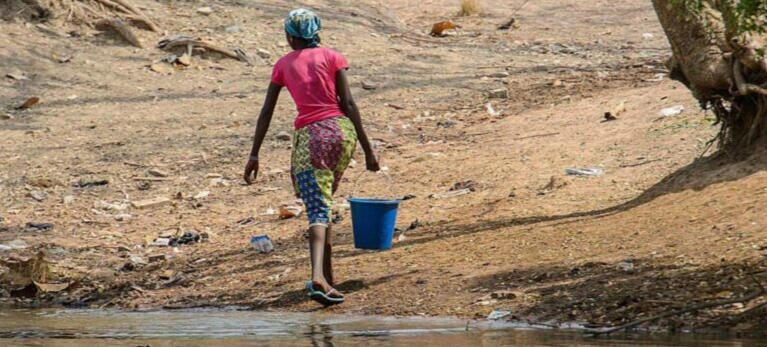
The reasons for water scarcity are manifold - climatic changes, industrial lowering of the groundwater level, and an extremely increased demand. Drilling bans are circumvented and seemingly simple solutions such as desalination plants often come with other challenges for the environment, or are simply too costly for the countries concerned.In addition, successful lobbyism of big corporations and political crisis, especially in developing countries, make it difficult to align the values for a sustainable future. In many countries, the water on a property is now worth more than the land with planting.
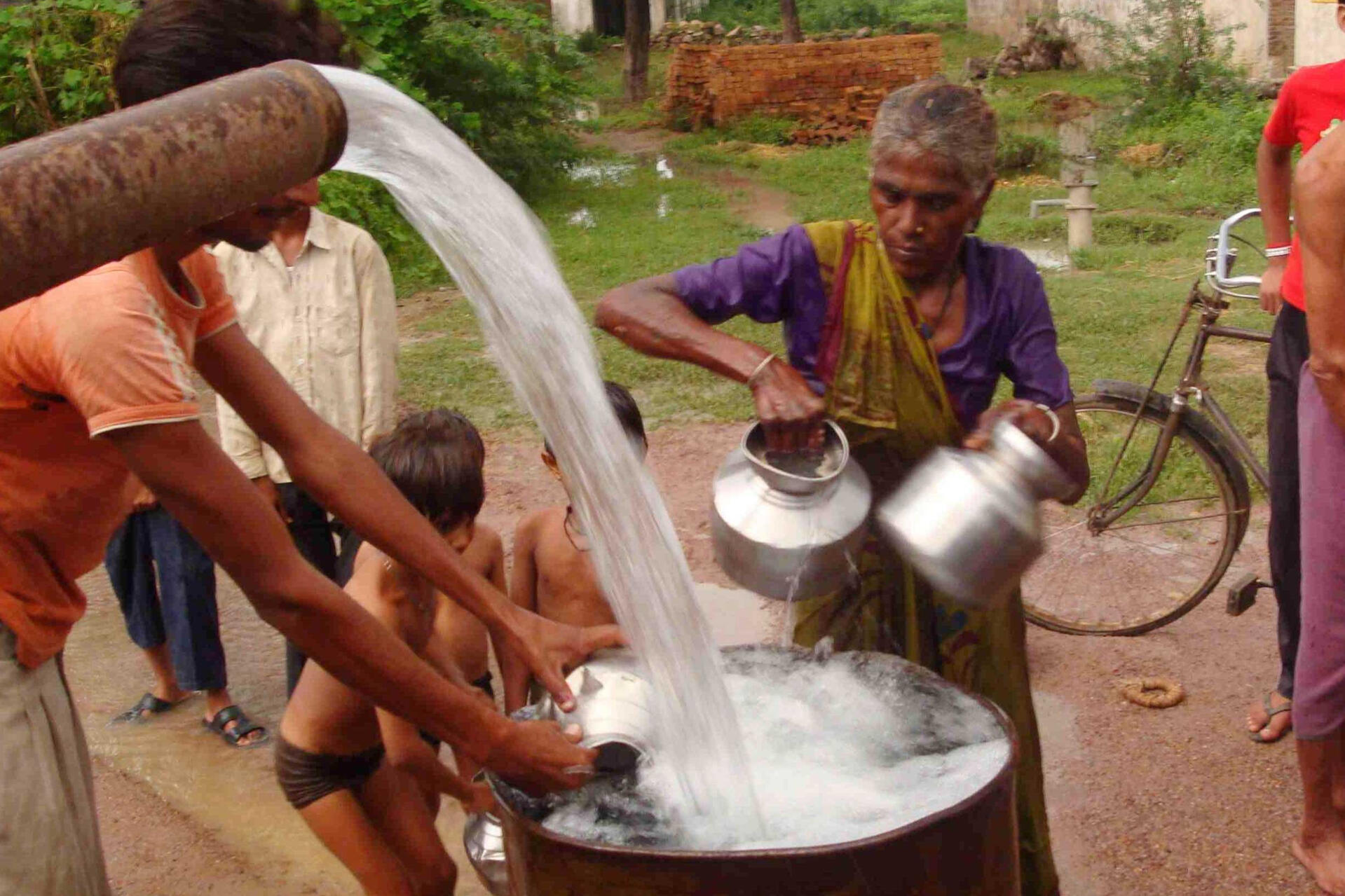
CIBIS PROJECT has consistently demonstrated in multiple drillings around the world that we have a way out of this crisis. Be part of this change and join our mission to make water accessible to everyone at minimum cost.
The Great Opportunity
PRIMARY WATER
“You can only find what you are looking for.”If groundwater is not accessible and desalination of seawater is not an option, what are we looking for?
Let’s remind ourselves: Groundwater is rainwater that does not evaporate and seeps into the ground in geological flow zones. It usually reappears on the Earth’s surface in the form of streams and rivers and eventually flows into the sea.
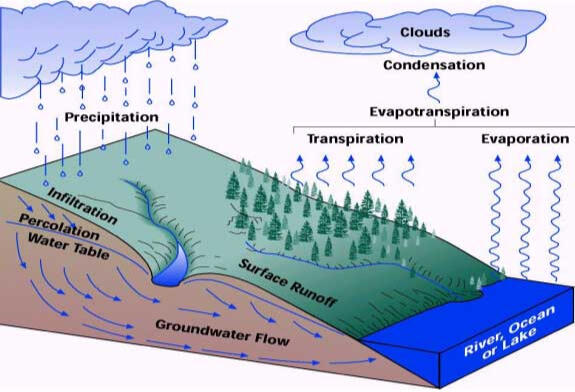
The water we are looking for is not normal groundwater but water which is formed and flows in much deeper regions of the Earth's crust. It is mostly referred to as Vein Water - and more specifically Primary Water.
Primary Water has two great advantages over groundwater:1. AbundancePrimary Water flows in closed systems, similar to the circulatory system in the human body. At its origin, the vein is under high pressure, but the pressure weakens as it branches further into the body.
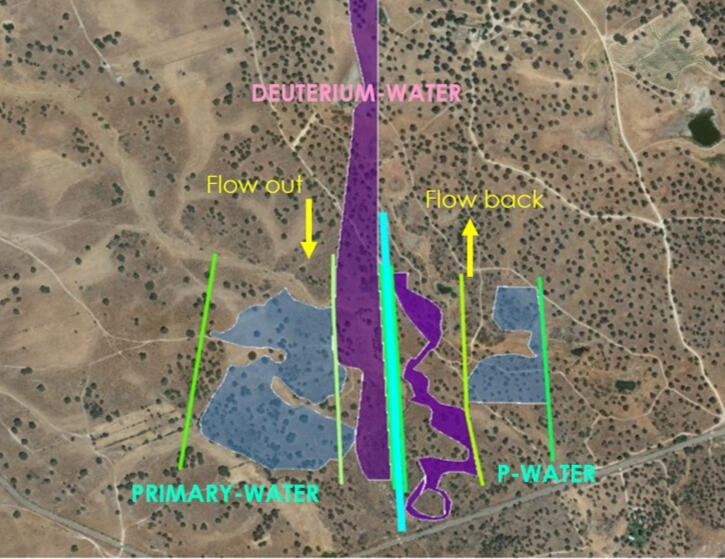
The same is true for water veins in the earth. At its origin, the new water is constantly being produced at a certain depth. It flows in the „leading away vein“ to a turning point, then again, with less pressure, in the parallel, „leading back vein“ to the beginning.
Large veins have several water generation points in their course, which fill up the veins with fresh water. This explains the consistent stability of these veins.Though mostly seated deeply underground, most Primary Water veins have vertical high points where they come closer to the Earths surface, sometimes even out of the ground.
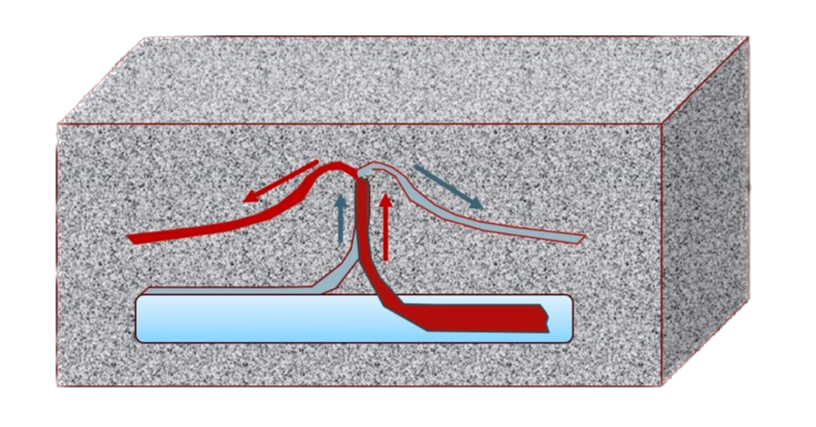
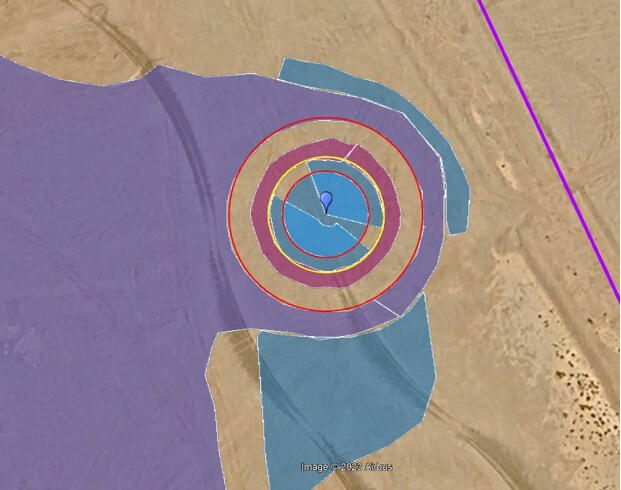
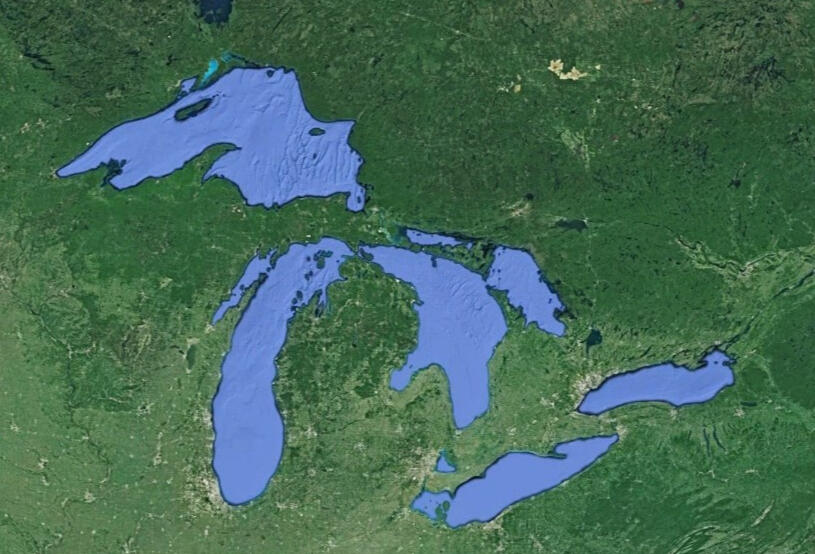
These occasions can also happen at very high volume. Many factors indicate that large rivers and lakes worldwide - such as Lake Baikal or the Great Lakes in the US and Canada - are mainly filled by vein water.
2. Water QualityPrimary Water has very distinct attributes. Our research has shown that it is very suitable as drinking water and also for many industrial purposes:
Due to the different water densities, groundwater and Primary Water do not mix which keeps it cleaner
The unusual properties of Primary Water (e.g. value of pH 7 or higher) prevent germination
It can be stored for a long time, even in hot climates
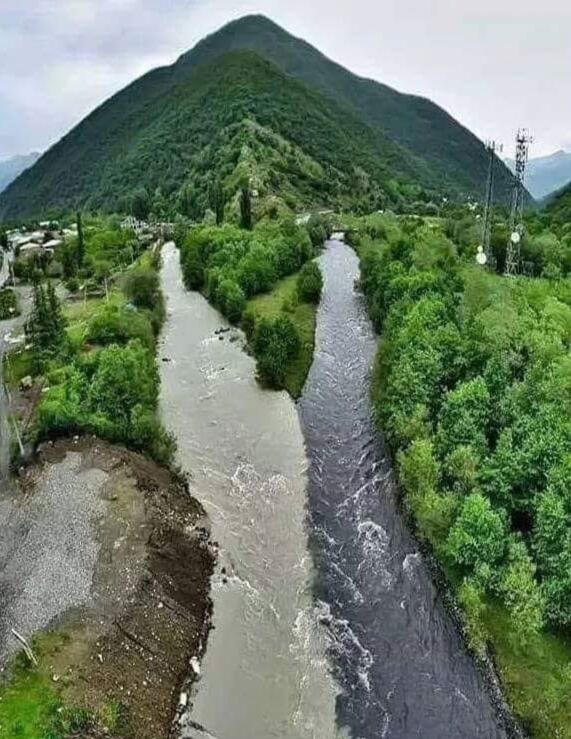
Below is an example picture from Orissa, in India which shows the two basic types of water right next to each other. The white river consists of groundwater with many suspended particles, the dark one contains only pure Primary Water. It demonstrates beautifully how due to their different properties they do not mix.
Our Approach
FINDING WATER
For more than a century, finding water was approached in mainly two completely different ways:
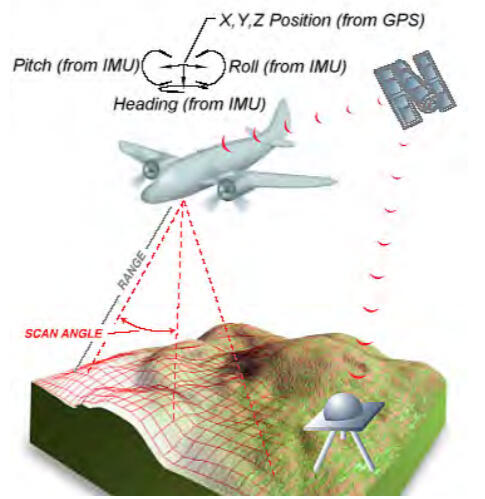
Firstly, through seismographic analyses, radio analysis and satellite scans. These technologies often requires planes, drones and a lot of technical equipment which makes them time consuming and very costly.In a seismographic analysis, only anomalies of the subsurface can be detected. By interpreting them, conclusions can be drawn about the occurrence and location of groundwater or aquifers. What is technically detected though is the geological changes, not the water itself.
The second much older method is what’s known as dowsing. This more “intuitive” approach in which dowsers use their bodies as antennas has been as much debated as it’s been successful. Their finding rate is high, yet many dowsers fail to provide a scientific backup to their knowledge.
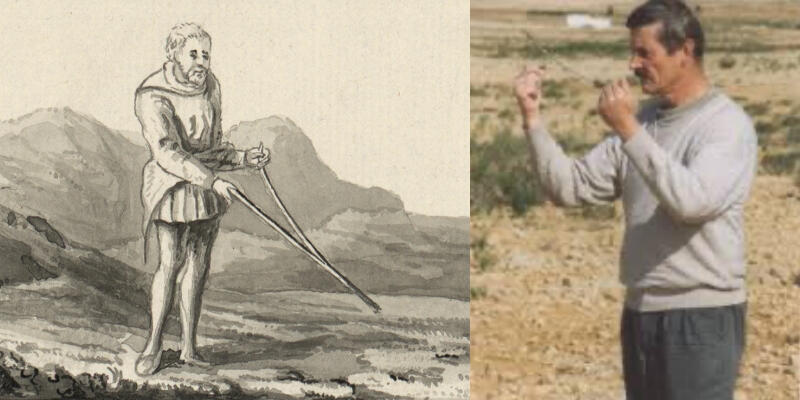
In over 30 years of consorted research, CIBIS PROJECT has developed an understanding of the underlying physical principles of dowsing, and found a systematic way to combine and unite it with modern science and technology.With our proprietary technology we can define the locations of Primary Water before drilling and predict underground access points closer to the surface. That gives our clients the chance to drill for Primary Water veins at much lower costs.
Sevices
OUR TECHNOLOGY
Combined with modern GPS-linked drilling procedures, our proprietary technology offers our clients two extremely important advantages:
We can precisely locat water in the deeper regions of the Earth’s crust with a high success rate, in a time- and cost-efficient manner
We can pre-evaluate some of the water qualities and therefore identify Primary Water, which offer extremely beneficial properties for both, human consumption and industrial purposes
What sets us apart from the competition is that our technology works according to the "resonance principle". As Richard Feynman famously said, on the level of quantum physics "like likes like". Through our research we managed to abstract and generalise the quantum-physical attributes of various vein waters in order to create a point of reference. This enables us to not only find vein water - and more specifically Primary Water - in almost any region in the world.
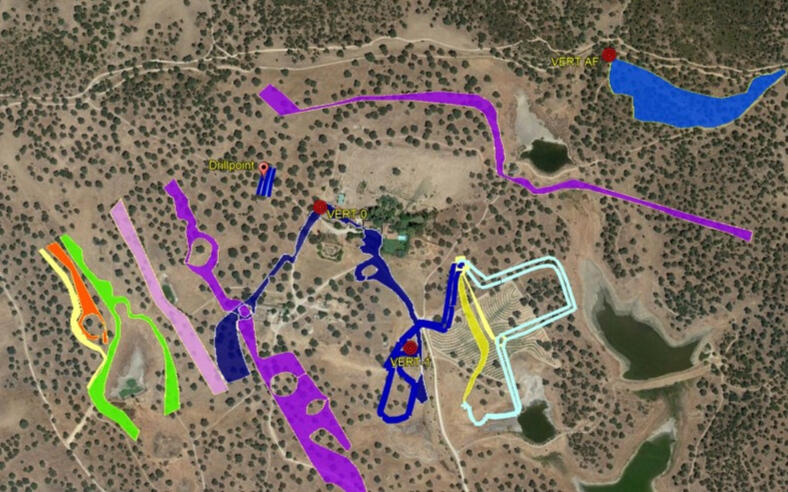
Satellite images are sufficient for us to locate and mark the water deposits even in the lower regions of the Earth's crust. We can also predict the depth of the water vein and some of the water qualities. Our technology offers the possibility to examine small-scale and large-scale areas time-efficiently in one operation.
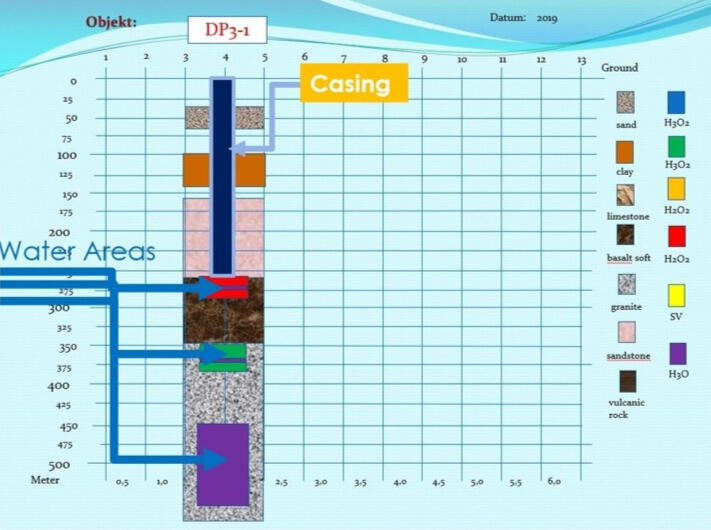
To some degree we can also determine details about the geological layers between the surface and the water - all before any test drilling. This makes the initial analysis and preparation extremely quick and enables us to some degree to define the necessary drilling equipment and related costs.
Milestones
SUCCESS RATE
Our research is based on more than 10 years of water exploration in India between 2009-2020 - with drillings a.o. in Aznar, Bagdari, Gujarat, Haryana, Indore, Mhowgaon, New Dehli.The work of CIBIS PROJECT has reach a success rate of over 80%. In fact, 9 of the last 10 drillings in Spain and Australia were completely successful.
Here are some examples pictures of analysis material and drillings:
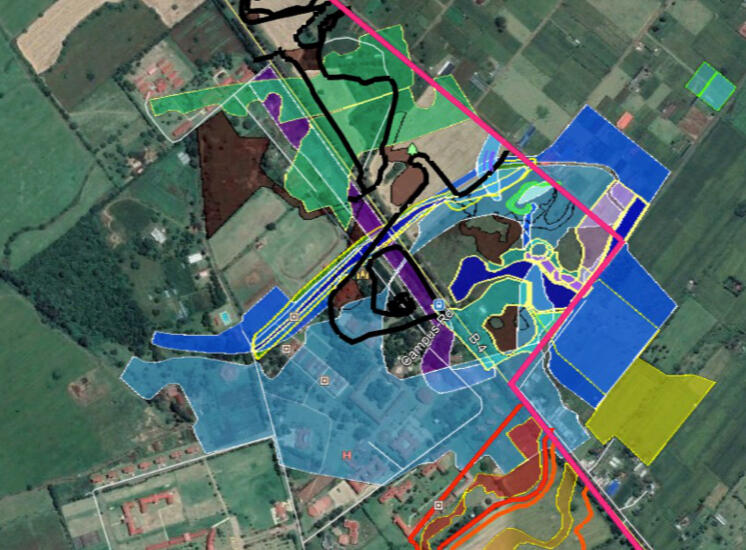
The picture above shows an overview with large veins in the pre-defined area of the client. Black lines represent cracks, brown areas are cavities. All blue colours symbolise water surfaces and currents at varying depths and of different thickness. The depth ranges from about 160 M to 1700 M. The small-scale local geological conditions ultimately determine the exact drilling point.
Location: Nakuru, Kenya
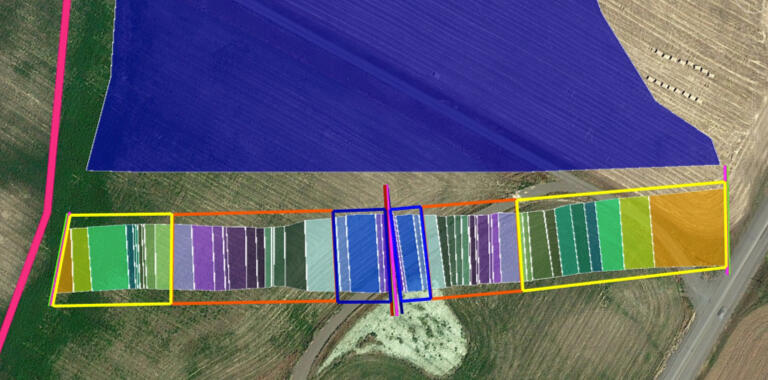
The second picture shows to what degree we can distinguish various structures and densities (coloured stripes) of a vein (big blue area above). Each vein is formed by up to 40 different types of water properties which can be classified into 8 groups. Smaller veins have correspondingly fewer different molecular shapes. These distinguishable shapes cannot be mixed even by manual agitation.
Location: Cottonwood, Idaho USA
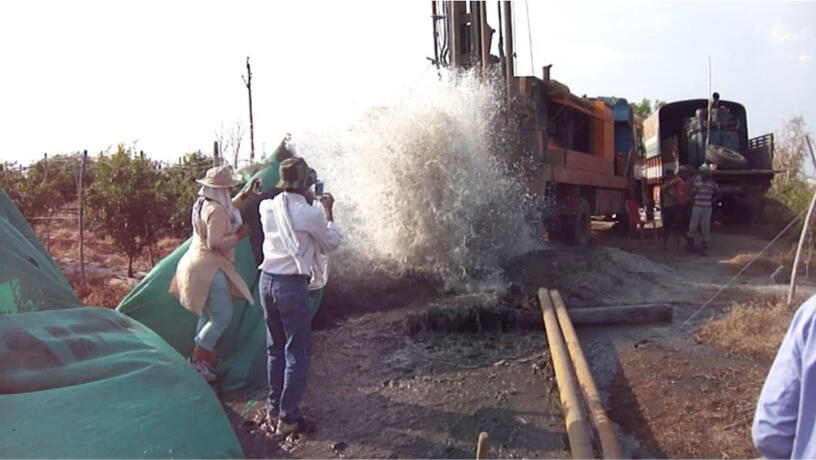
Indor, Madhya Pradesh, India
Depth or original vein: 1750 M
Drilling was made at a vertical highpoint at the depth of 150 M, and only 2 M into the water layer
Volume: 35 M3 / h
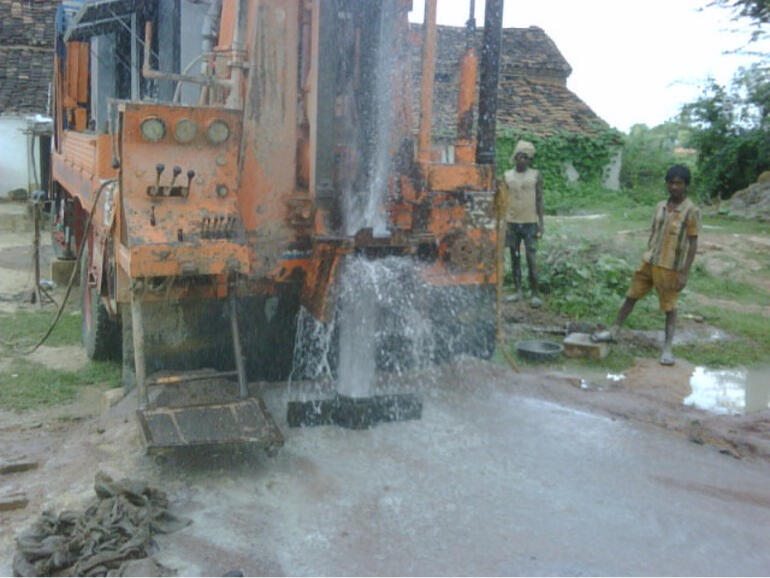
Aznar, Utah Pradesh, India
Depth: 200 M, very small vein
Volume: 21 M3 / h
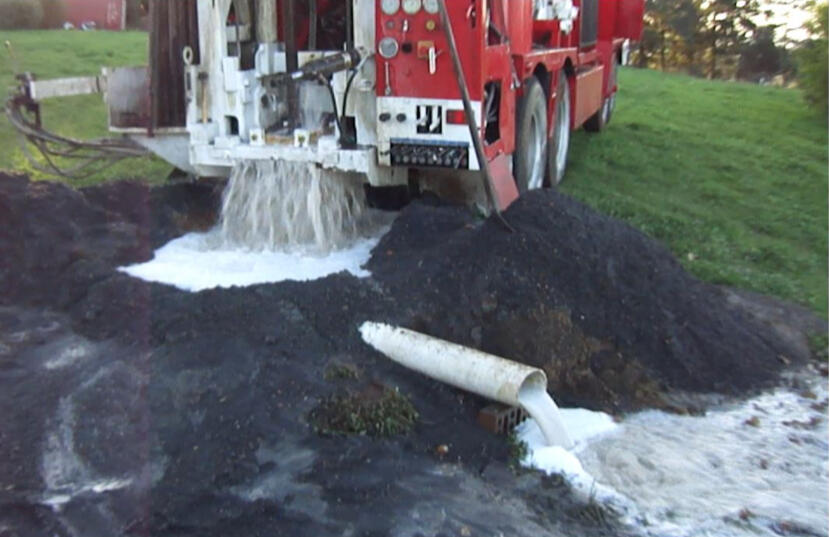
NSW, Australia
Depth: 97 M
Drilling was made only 3 M into the water layer
Volume: 21M3 /h
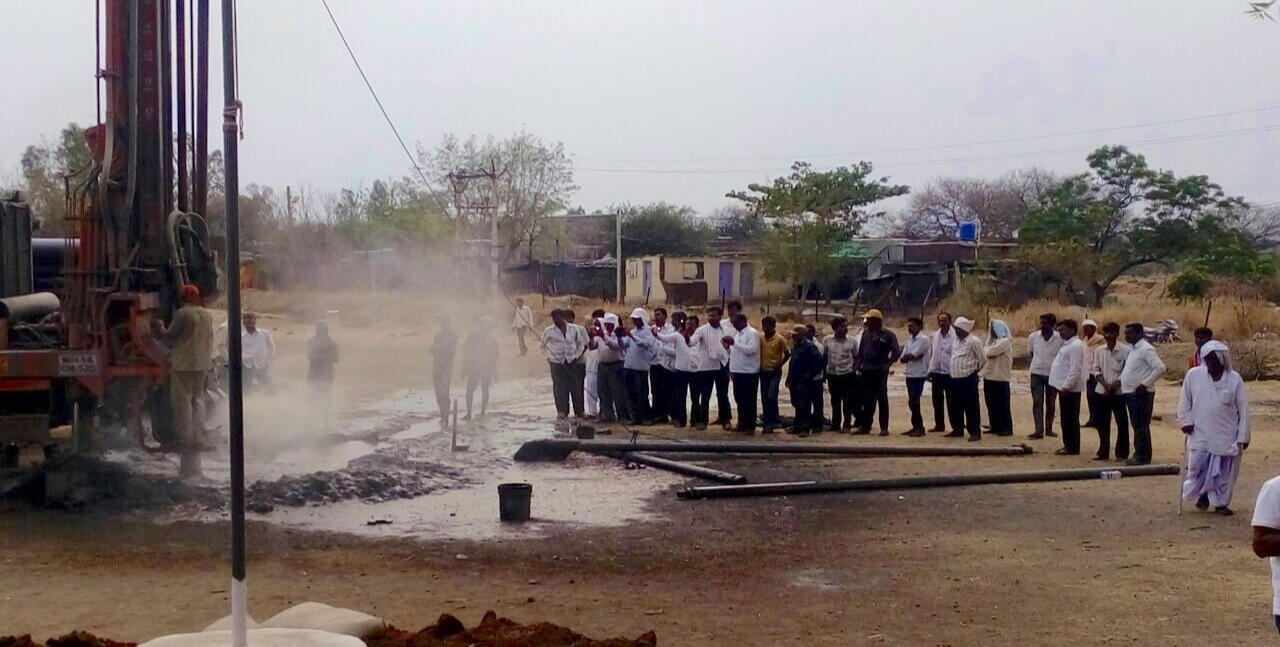
Valandi Latur, Madhya Pradesh, India
Ground full of holes
Volume: 10 M3 / h
Contact Us
Will you join our mission?
If you need water or are involved in water exploration, do get in touch. We'd be happy to discuss in detail what CIBIS PROJECT can offer you:
Due to the nature of this work, this can only be a short introduction to our expertise and services. For more detailed information, please get in touch and visit our main website.